|
|
|
|
|
THE OBSERVER
|
| |
|
| |
|
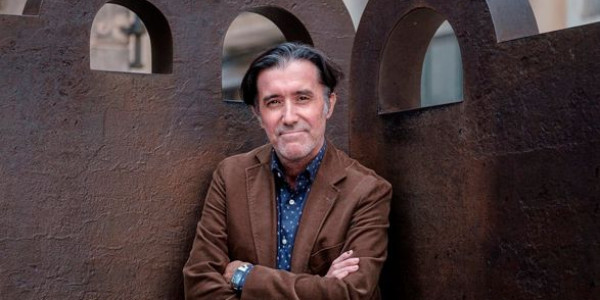
Francesc Muñoz
Professor of Urban Geography and Director of the Urbanization Observatory at the Universitat Autònoma de Barcelona
|
|
When geographer David Lowenthal penned the first pages of his book The Past is a Foreign Country in 1985, he could not have imagined just how accurate his observations would prove to be in the 21st century regarding the relationship that post-industrial society establishes with the past. From old songs to revivals, remakes and even grandmother’s recipes, the past has escaped the museums and is now everywhere.
[+]
|
| |
|
| |
|
MOSAIC
|
| |
|
|
|
|
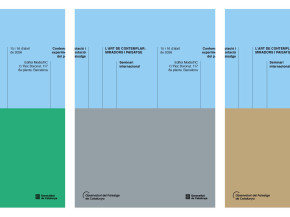
Videos from the International Seminar “The Art of Contemplation: Viewpoints and Landscape” are now available
|
|
|
|
The videos of the International seminar "L’art de contemplar: miradors i paisatge" (‘The Art of Contemplation: Viewpoints and Landscape’) are now available. Specialists from around the world gathered to rethink the act of looking, viewpoints and the transformative relationship with landscape at an event held on 15 and 16 April at the MediaTIC building in Barcelona.
Organised by the Landscape Observatory in collaboration with the Catalan Ministry of Territory, Housing and Ecological Transition, the seminar brought together national and international experts from a range of disciplines.
You can now watch all the presentations in their original language on the Observatory’s website.
|
|
|
|
|
|
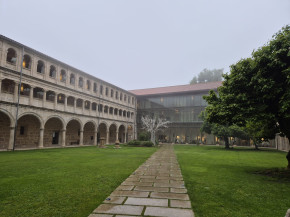
Participation of the Observatory in the Council of Europe Landscape Convention Workshops
|
|
|
|
The Landscape Observatory of Catalonia took part in the 27th International Workshop on Implementation of the Council of Europe Landscape Convention, held in Ribeira Sacra (Galicia) on 12 and 13 May 2026.
During the meeting, Laura Puigbert, a technician at the Observatory, spoke about the transformation of Catalonia’s landscape as a consequence of climate change and presented several examples of good practices in mitigation and adaptation that have direct effects on the landscape.
The meeting, organised by the Council of Europe, the Ministry of Culture and the Xunta de Galicia, brought together around fifty representatives of states, international organisations and landscape experts.
|
|
|
|
|
|
|
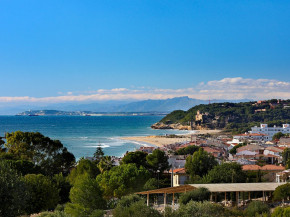
The Observatory disseminates the diversity of landscapes of the three stages of the Tour
|
|
|
|
The Landscape Observatory has collaborated with the Department of the Presidency of the Generalitat by disseminating landscape information of this international sporting event. In just three days, from July 4 to 6, the Tour of Catalonia traveled through eighteen landscapes that show the natural and cultural wealth of the country. “Three stages, eighteen landscapes”, explains the landscape singularities of the three stages, accompanied by images from the Observatory’s Image Archive and a map of the stage with the landscapes through which it crosses. This year, it also collaborated for the second time with the Volta ciclista.
|
|
|
|
|
|
The Observatory contributes its vision on landscape policies at a congress in the Canary Islands
|
|
|
|
The First Landscape Congress of the Canary Islands was held in Las Palmas de Gran Canaria and Santa Cruz de Tenerife on 5, 6 and 7 May. Organised by the government of the Canary Islands and the CICOP Foundation, the congress studied the current challenges of landscape and its governance from an interdisciplinary perspective. On the first day of the congress, the Observatory’s director gave a talk assessing twenty years of landscape policies in Catalonia.
|
|
|
|
|
|
|
Joan Sorolla donates photographs to the Landscape Observatory’s Image Archive
|
|
|
|
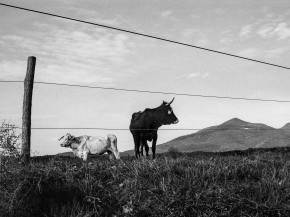
Photograph Joan Sorolla has donated around fifty photographs to the Landscape Observatory’s Image Archive. The vast majority come from the photographic project La volta al mont, a black-and-white photobook of the landscape of the Massís del Mont and its sanctuary, which aims to show the unique surrounding landscapes, often from seldom-visited places or unusual viewpoints. This project was in fact part of the international seminar 'The Art of Contemplation: Viewpoints and Landscape’, organised by the Observatory.
|
|
|
|
|
|
The Landscape Observatory has a new LinkedIn page
|
|
|
|
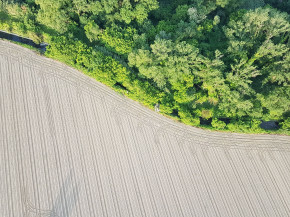
The Landscape Observatory of Catalonia has launched its own LinkedIn page in 2026. This new communication channel allows us to share the Observatory’s activities, projects and initiatives on a regular basis.
With this presence on the network, the Observatory extends the reach of its content and strengthens one of its key objectives: to promote the exchange of knowledge about landscape among public administrations, academia, professionals and civil society. [+]
|
|
|
|
|
|
|
"Parlour gardens" al Jardí Botànic de Barcelona
|
|
|
|
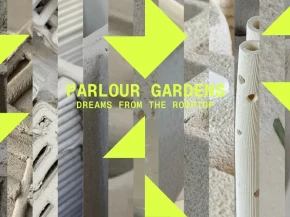
From 5 June to 4 October 2026, the Barcelona Botanical Garden will host an exhibition celebrating the centenary of the revolutionary ‘living room gardens’ created by Rubió i Tudurí, Artigas and Dufy (1926) with a contemporary approach that combines design, botany and technology. The exhibition invites fifteen international architects and landscape architects to reimagine the domestic garden through 3D-printed ceramic pieces that function both as models and as living planters. The curators of ‘Parlour Gardens’ are Marina Cervera, James Hayter and José Luis Cortés. For more information, click here.
|
|
|
|
|
|
New study on the origin of opaque toponyms in Pallars Sobirà
|
|
|
|
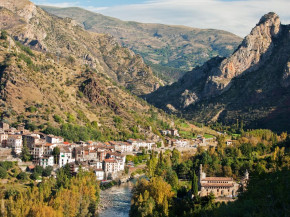
Núria Garcia-Quera, a professor of Physical Geography at the Autonomous University of Barcelona (UAB), is interested in the etymology of opaque toponyms—place names that have lost their original meaning—in Pallars Sobirà. Her research helps us to better understand the relationship between language, landscape and human activity.
‘Toponyms are words that describe the landscape’, Garcia-Quera explains. Her research has identified five Indo-European lexemes used millennia ago to define the territory and explain many current names. She chose Pallars Sobirà because it is ‘an area enclosed by nature’, making it an ideal place for studying how landscape has shaped language.
You can read the full article (in Catalan) here.
|
|
|
|
|
|
|
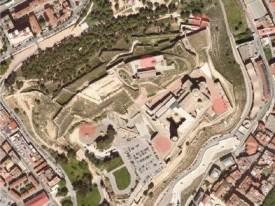
Let’s Discover the Landscape of Lleida
The educational project Descobrim el paisatge de Lleida (‘Let’s Discover the Landscape of Lleida’) aims to show children and young people the urban, rural and natural landscapes of Lleida through activities that foster connection with the territory, strengthen local identity and social cohesion and promote a new landscape culture based on care and respect for the environment.
Aimed at primary and secondary school students, the project includes three educational approaches: a discovery of the territory through a treasure hunt, a land-art activity and a landscape perception exercise in which participants draw the landscape as described by another observer.
It is an initiative of the Lleida Landscape Foundation supported by the Landscape Observatory of Catalonia.
|
|
|
|
|
DIGITAL LANDSCAPE
|
| |
|
|
|
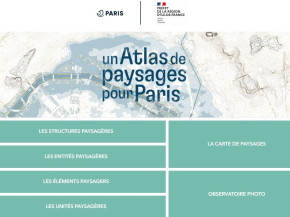
Un Atlas de Paysages pour Paris
|
|
|
|
The Atlas de Paysages pour Paris is an interactive digital tool that allows users to explore the richness and complexity of Parisian landscapes. The website offers a detailed reading of the city through landscape structures, units and elements, as well as routes that invite visitors to discover Paris with a renewed perspective.
This atlas — the result of collaboration between the Ville de Paris and the State — provides everyone with rigorous and accessible knowledge about the city and becomes an essential foundation for understanding the environmental, social and urban challenges facing the capital. It can be consulted here.
|
|
|
|
|
|
|
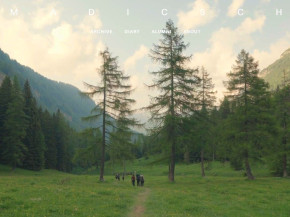
A Nomadic School
|
|
|
|
A “nomadic school,” as they define themselves, is in fact a few days a year when they bring artists into the midst of the Italian Alpine landscape and “invite them to inhabit a context that offers the opportunity to examine artistic practices through the lens of the Alpine landscape while observing their pedagogical effect; without dogmatic structures, the Nomadic School thinks of the scenic space, the landscape and the climate crisis as aesthetic territories that have political implications without using political language.”
On the website you can find a collection of all the projects and artists who have taken part in the school.
|
|
|
|
|
|
|
| |
|
PUBLICATIONS OF INTEREST
|
| |
|
|
|
|
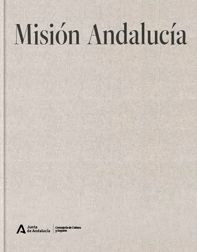
Misión Andalucía. Ocho miradas sobre el paisaje rural andaluz
|
|
|
Consejería de Cultura y Deporte. Junta de Andalucía (ed.). Sevilla: Centro Andaluz de la Fotografía, 2026. ISBN: 978-84-9959-564-1.
‘Misión Andalucía’ (‘Mission Andalusia’) is a project bringing together photographs by eight authors who provide a contemporary vision of the Andalusian rural landscape, exploring its geographical, social and cultural diversity. Without aiming to be exhaustive, the exhibition focuses on the relationship between nature, human activity and territorial transformations, revisiting traditional imaginaries while avoiding clichéd views.
|
|
|
|
|
|
|
|
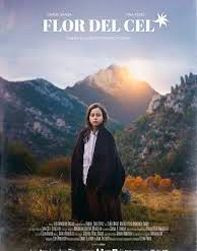
Flor del cel
|
|
|
Curtmetratge. Eloi Aymerich (dir.) [S.l.]: Clack, 2026.
Flor del cel is a short film born from a deep affection for a landscape, its history and its people. It tells the initiatory journey of a girl and an elderly trementinaire in the mountains of the Catalan Alt Pirineu, in a story that combines landscape, fantastical and social elements.
The film highlights a key figure in the history of mountain regions: the trementinaires, women who travelled across the Pyrenees selling remedies and medicinal herbs, central to the tradition of the Vall de la Vansa and other areas of the Alt Pirineu.
The project is driven by the audiovisual cooperative Clack and is supported by various institutions and associations.
|
|
|
|
|
|
|
|
|
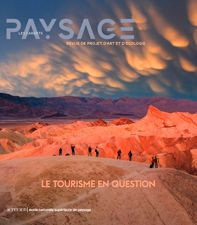
Le tourisme en question
|
|
|
Arles: Actes Sud; École nationale supérieure de paysage, 2026. ISBN: 978-2-330-21850-8. (Carnets du Paysage; 48)
The taste for travel is ancient. If we focus on the more recent period, we can trace the birth of modern tourism to the mid-18th century, specifically the era of the Grand Tour, reserved for young aristocrats. Interest in travel intensified in the 19th and 20th centuries due to the democratisation of transport and the broader spread of geopolitical knowledge. Soon came ‘mass tourism’, which brought considerable changes in our relationship with the landscapes we visit. Does travel, now called ‘tourism’, pose a threat to landscapes?
|
|
|
|
|
|
|
|
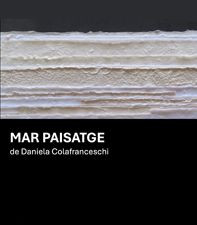
Mar paisatge
|
|
|
Daniela Colafranceschi. [Salt: Casa de Cultura de Les Bernardes de la Diputació de Girona], 2026
To combine the sea with landscape has meant traversing some of the many meanings of the relationship between both, with the desire to highlight the urgency of thinking of the sea, or parts of it, as landscape, welcoming bodies of water within the status of territory. This book analyses the question to understand it rather than to define it, bringing the sea into landscape-related reflections, perspectives and experiences that can explain the relationship between us and the territories we inhabit.
|
|
|
|
|
|
|
|
|
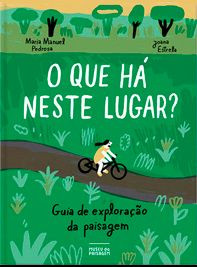
O que há neste lugar? Guia de exploração da paisagem
|
|
|
Maria Manuel Pedrosa. [Lisboa]: Museu da Paisagem, 2019. ISBN: 978-989-20926-1-4
This guidebook invites us to explore the landscape with a renewed gaze, beyond the clichés of the ‘postcard’, articulating questions and small practices that help us to recognise the visible and the invisible elements that shape each place. As such, it serves as an accessible and sensitive introduction to the idea that landscape is a living continuum of which we form part, and for which we must learn to care.
|
|
|
|
|
|
|
|
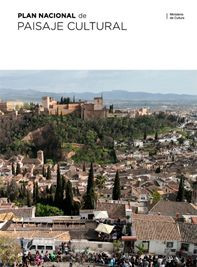
Plan nacional de paisaje cultural
|
|
|
Antonio Jesús Antequera (coord.). Madrid: Ministerio de Cultura. Subdirección General de Documentación y Publicaciones, 2026
The diversity and values of Spain’s landscapes, together with the increase in social demand for quality landscapes, the growing incorporation of landscape into territorial and local development strategies, the complexity of its management and its vulnerability and the threats it faces, all justify a National Plan for Cultural Landscape that articulates appropriate mechanisms for safeguarding it and overseeing its coherent transformation, with all the precautions that its fragility and values require. It can be consulted here.
|
|
|
|
|
|
|
|
|
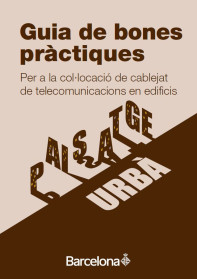
Guia de bones pràctiques per a la col·locació de cablejat de telecomunicacions en edificis
|
|
|
Institut Municipal del Paisatge Urbà i la Qualitat de Vida. Barcelona: Ajuntament de Barcelona, 2025
This new guide issued by the Municipal Institute of Urban Landscape and Quality of Life establishes criteria for integrating telecommunications cabling in buildings while minimising its visual impact and ensuring urban quality. It sets out guidelines on routing, fixings, organisation and materials to ensure safe, discreet installations compatible with architectural heritage. It also promotes coordinated solutions among operators to prevent the proliferation of cables and to preserve the image of public space. It can be consulted here.
|
|
|
|
|
|
|
|
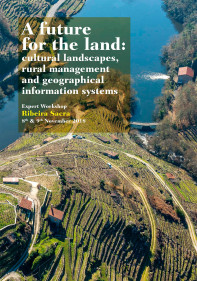
A future for the land: cultural landscape, rural management and geographical information systems
|
|
|
Juan Mario Crecente Maseda (coord.). [Oleiros]: Fundación Juana la Vega; Xunta de Galicia, 2019
The book gathers the conclusions of the seminar held in Ribeira Sacra in 2018 on the management and protection of cultural landscapes. Coming from different perspectives, it analyses the role played by new digital technologies, and especially geographical information systems, in recognising the complex values of cultural landscapes and their integration into management systems.
|
|
|
|
|
|
|
|