|
|
|
|
|
THE OBSERVER
|
| |
|
| |
|
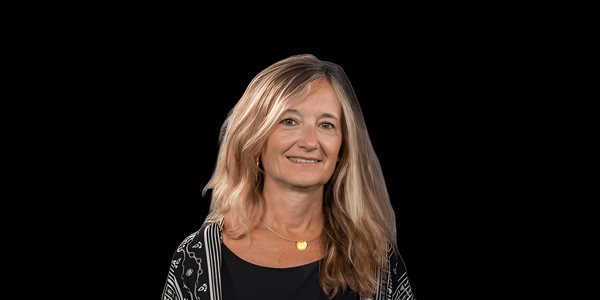
Elisabeth Cirici i Amell
General director of Spatial Planning, Urban Development and Architecture at the Catalan Ministry of Territory, Housing and Ecological Transition (Generalitat de Catalunya)
|
|
This year, the Landscape Observatory of Catalonia marks two decades of activity since its inception in 2005 to support the landscape policies of the Government of Catalonia (Generalitat de Catalunya) as part of the Law on the Protection, Management and Planning of the Landscape and the European Landscape Convention. Its overarching mission has been to boost knowledge and social involvement in managing and conserving the landscape, integrating it into sectoral and territorial policies.
[+]
|
| |
|
| |
|
MOSAIC
|
| |
|
|
|
|
The Landscape Observatory of Catalonia celebrates 20 years in an event at the Palau de la Generalitat
|
|
|
|
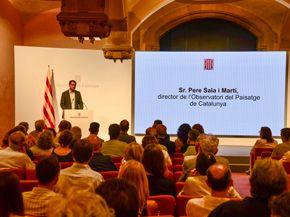
The Landscape Observatory of Catalonia commemorated two decades of history in an emotional event held last Friday, 27 June in the Auditorium of the Palau de la Generalitat. The event was attended by many institutional authorities, local professionals, academics, organisational representatives and many of those who have helped to make the Landscape Observatory a key player in landscape policies over these 20 years. It was presided over by Sílvia Paneque, the Catalan Minister of Territory, Housing and Ecological Transition and hosted by journalist Ignasi Aragay. It began with a speech by Joan Nogué, the first director of the Observatory, from 2005 to 2017, followed by the current director, Pere Sala i Martí. The event was brought to an end by Catalan Minister Sílvia Paneque, who congratulated the Landscape Observatory and said that ‘its work during these two decades has been exemplary’.
|
|
|
|
|
|
Video commemorating the 20th anniversary of the Landscape Observatory
|
|
|
|
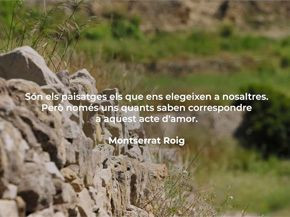
During the event held on 27 June to celebrate the 20th anniversary of the Landscape Observatory at the Palau de la Generalitat, a video was shown that reviewed the Observatory’s activity over the last two decades and raised several future challenges for Catalan landscapes through the main lines of work it pursues. Produced by the Landscape Observatory and made by Cactus Media, the video featured Joan Nogué, Martha Fajardo, Jean-Pierre Thibault, Itziar González, Roser Vernet, Clara Nubiola and Benedetta Castiglioni. These seven people who have contributed over the years to the Observatory’s thinking and action reminded us that we must continue to think of the landscape as a common, cross-cutting and essential good for individual and collective wellbeing.
|
|
|
|
|
|
|
New cartography of the landscape landmarks of Catalonia
|
|
|
|
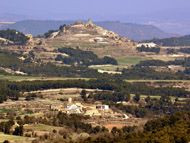
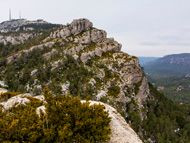
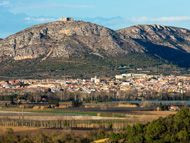
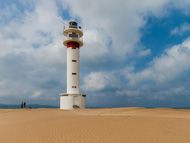
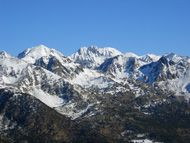
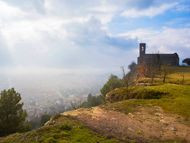
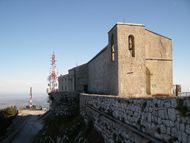
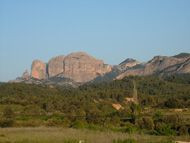
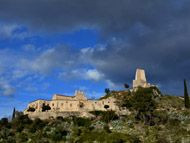
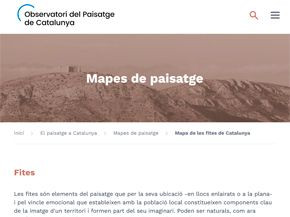
Prepared from information from landscape catalogues, fieldwork and bibliographic research, the new map includes 475 landscape landmarks of Catalonia. Landscape landmarks are key components of a territory’s identity that form part of its collective imagination due to their location (whether elevated or in flat areas) and the emotional connection they create with the local population. They can be natural, such as distinctive landforms (hills, plateaus, cliffs, islands, etc.), or man-made, such as towns with unique profiles, defensive structures (castles, towers, etc.), religious buildings (churches, bell towers, etc.), civil constructions (lighthouses, telecommunications towers, etc.) and others. Many of the landmarks hold a variety of historical, aesthetic and symbolic values. The map can be found at the ‘Landscape maps’ section of the Observatory’s website.
|
|
|
|
|
|
International experts meet in Girona and Olot to discuss how to adapt landscape to climate change
|
|
|
|
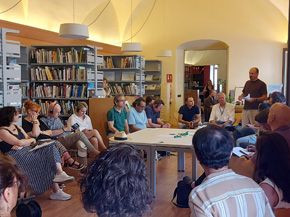
From 3 to 5 July, the Ministry of Culture and the Landscape Observatory of Catalonia jointly organised the Fourth International Technical Seminar on Cultural Landscape under the title ‘Cultural landscapes facing climate change: transition, adaptation and transformation’ in Girona, Olot and the landscape of Empordanet-Baix Ter. The experts attending the event reflected on the impact of climate change on the landscape. Not only did they consider the physical changes that climate change is causing, but they also considered how the significance that these landscapes have for the population is changing and discussed the mitigation and adaptation strategies necessary to face this global challenge. The seminar consisted of two days of technical discussion (3 and 4 July) at the COAC headquarters in Girona and at the Landscape Observatory, in Olot, followed by a day of field visits (5 July). The conclusions of the seminar will be published soon.
|
|
|
|
|
|
|
The challenge of beauty in the landscape
|
|
|
|
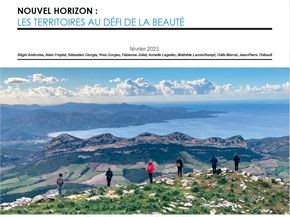
In a new publication, the group Paysages de l’après-pétrole (PAP) reflects on the fundamental role of landscape beauty as a tool for an optimal ecological and social transition. It proposes a new perspective on this beauty, understood not as an aesthetic luxury, but as an essential resource for building higher-quality and fairer territories with greater social cohesion. In this sense, the group asserts that perceiving beauty in a territory undergoing transformation can alleviate anxiety and promote social acceptance of change. Beauty thereby becomes an indicator of justice and wellbeing. This shared aesthetic also opens the door to real democracy. Here is the emotional and transformative power of beauty expressed through landscape.
|
|
|
|
|
|
Malta ratifies the European Landscape Convention, reflecting Catalan landscape policies
|
|
|
|
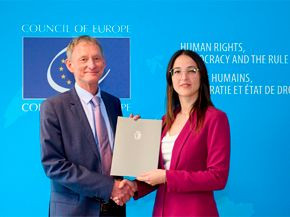
On 26 May 2025, Malta ratified the European Landscape Convention, becoming the 41st Council of Europe state to do so. The country’s media outlets covered the ratification, positioning Catalonia’s landscape policies as a model to follow. It stated that the ‘Landscape Law of Catalonia led to the creation of the Landscape Observatory, an advisory body responsible for promoting the protection, management and planning of the landscape’, and that ‘through public consultations and fieldwork, the Observatory developed landscape catalogues that identified different landscape units and established quality objectives for each one’ for the purpose of integrating them into spatial and urban planning policies.
|
|
|
|
|
|
|
The Observatory and Sonograma magazine promote soundscapes
|
|
|
|
Sonograma magazine, a leading publication on musical thought and cultural dissemination in Catalonia, has begun a partnership with the Landscape Observatory of Catalonia to promote various soundscape projects. Their partnership involves the publication of a new section during eight editions of the magazine over the next two years entitled ‘Inflexions sonores’ (‘Sound inflections’), which promotes the work of soundscape artists who have worked with or been in contact with the Landscape Observatory. It was launched on 23 April 2025 with the publication of the article ‘Escoltar, recopilar’ (‘Listen, collect’) by Catalan photographer Laura Van Severen, which explains the project Escoltar–Recopilar (‘Listen–Collect’). The project explores the relationship between sound, memory and landscape. The article was followed by another, ‘Quan el soroll esdevé paisatge: mesurar, percebre i actuar’(‘When noise becomes landscape: measuring, perceiving and acting’), by the engineer Rosa M Alsina and the epidemiologist Maria Foraster.
|
|
|
|
|
|
FIRE-RES: Wine producers as landscape stewards against wildfire
|
|
|
|
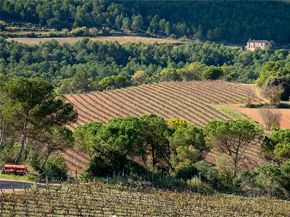
Europe is facing more wildfires as climate change brings rising temperatures, longer droughts and more abandoned land. As less land is actively farmed, vegetation becomes more overgrown, and fires can spread more easily. Properly maintained vineyards can be part of the solution. Vine plots, when well-managed, act as firebreaks by creating gaps in fuel and slowing the spread of flames. In this sense, Fire-Res (a project of Forest Science and Technology Centre of Catalonia, CTFC, with the participation of the Fire Brigade of the Generalitat and other entities of Catalonia) finds that making the landscape mosaic more varied is important for slowing down wildfires. According to this project, the wine sector can support this by providing cultivated zones between forested or abandoned areas. Recognising the broader public value of these vineyards could also justify targeted funding.
|
|
|
|
|
|
|
‘The landscape from the local perspective: views and experiences’, seminar in Reus
|
|
|
|
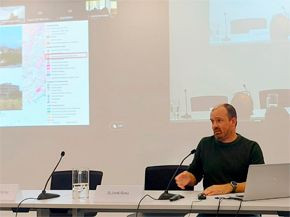
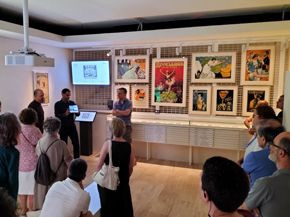
On 8 May 2025, a seminar organised by Tarragona Provincial Council and the Landscape Observatory was held in the Boca de la Mina classroom in Reus to present tools and resources for managing and improving the landscape in municipalities’ urban and rural environments, given the positive impact that landscape has on economic and social development and on people’s health. The attendees were mainly mayors, councillors and municipal employees (architects, engineers, urban planners, secretaries and technical staff in general) from the Tarragona region, though participants also came from other parts of Catalonia. The latest book published by the Landscape Observatory was presented during the seminar, entitled 'El paisatge en el món local. Mirades, criteris i experiències' (‘Landscape in the local world: perspectives, criteria and experiences’). You may view the programme and read about the presentations here.
|
|
|
|
|
|
VINSEUM and the Landscape Observatory organise a landscape-focused guided tour of the museum
|
|
|
|
On 28 June 2025, VINSEUM Museu de les Cultures del Vi de Catalunya, located in Vilafranca del Penedès, held a new session of the guided tour cycle called ‘Inviting you back’, in cooperation with the Landscape Observatory of Catalonia. The ‘Inviting you back’ cycle proposes that people who have previously visited VINSEUM rediscover it from the perspective of various guests. On 28 June, the Landscape Observatory offered a landscape-focused interpretation of part of the content of the museum’s collections and exhibition. During the activities prepared for the visit, Landscape Observatory representatives Pere Sala and Jordi Grau were accompanied by Xavier Fornos, the director of VINSEUM, and Jordi Ribas, the head of its cultural activities.
|
|
|
|
|
|
|
‘Remaining in a piece of land in the middle of the world’: a conversation about landscape
|
|
|
|
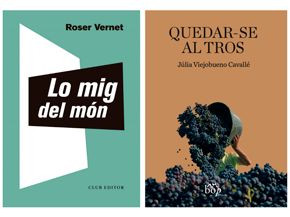
On 26 June 2025, the Landscape Observatory and the bookstore Isop in Olot jointly organised a four-way conversation between two writers from Priorat (Júlia Viejobueno, the author of Quedar-se al tros (‘Remaining with a piece’) (Vibop edicions), and Roser Vernet, the author of Lo mig del món (‘In the middle of the world’) (Club Editor), who spoke about their relationship with their everyday landscape and the links we have to the places where we live. Joining their talk were two other people dedicated to studying particular aspects of landscape: Pere Sala, the director of the Landscape Observatory of Catalonia, and Joan Nogué, a professor of Human Geography at the University of Girona.
|
|
|
|
|
|
15th National Conference RAP ‘Green Cities and Landscapes in Transformation’
|
|
|
|
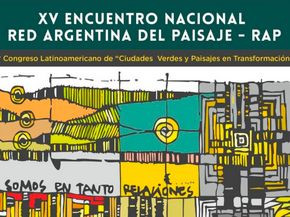
This conference of the Red Argentina del Paisaje will take place from 19 to 24 August 2025, in both in-person (San Juan, Argentina) and online formats. The general objective is to create a space for academic, professional and general public exchange to discuss, analyse and propose comprehensive strategies for urban landscapes, especially those that are most stressed. The Landscape Observatory cooperates with the conference, which is aimed at academics, researchers, students of various disciplines, professionals, government representatives and members of the general public interested in urban issues and landscape management and planning.
|
|
|
|
|

|
|
Associació Leader de Ponent and the Landscape Observatory organise a seminar focused on landscape charters
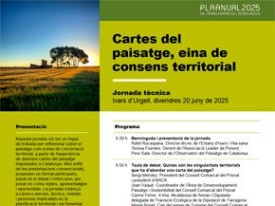
Held on 20 June 2025, the seminar ‘Landscape charters, a tool for territorial consensus’ was aimed at raising awareness of landscape charters, especially in the counties of Les Garrigues, Urgell, Pla d’Urgell and Segrià, based on the experience of territories that are currently initiating, promoting or implementing one. The potential of landscape charters and the challenges and problems that may arise during their creation were addressed in a discussion between several representatives of landscape charters that have already been approved and have years of experience in their development, such as those of Priorat, Conca de Barberà and Vall de Carme (Anoia), the latter of which is currently under way. The seminar was addressed to elected officials, experts, organisations and people involved in local planning and energisation.
|
|
|
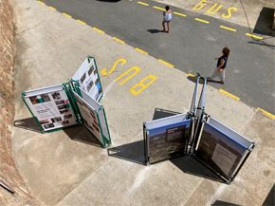
Habitar, a new publication released by Associació Prioritat
Habitar is a travelling exhibition in the municipalities of Priorat promoted by Associació Prioritat that shows the values of the Priorat landscape identified as part of the UNESCO candidacy. At the same time, it invites people to think about the need to agree on a participatory territorial model that respects history and combines tradition and innovation. The exhibition was created in part via a participatory process that helped to detect more values inherent to the cultural landscape, gave visibility to current problems and shaped proposals, which have now been collected in the publication ‘Habitar’ (‘Inhabit’).
|
|
|
|
|
DIGITAL LANDSCAPE
|
| |
|
|
|
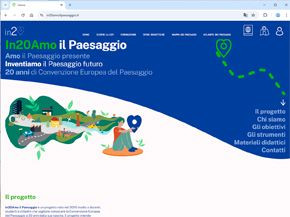
In20Amo il Paesaggio
|
|
|
|
Educational project created with the aim of disseminating the European Landscape Convention and specifically the need to protect, manage and order landscapes. It is aimed at secondary education students, teachers and citizens in general.
|
|
|
|
|
|
|
| |
|
PUBLICATIONS OF INTEREST
|
| |
|
|
|
|
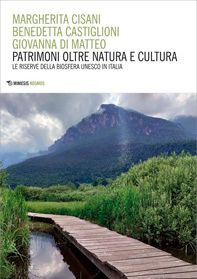
Patrimoni oltre natura e cultura. Le riserve della biosfera Unesco in Italia
|
|
|
Margherita Cisani, Benedetta Castiglioni, Giovanna Di Matteo. Milà: Mimesis Edizioni, 2025.
The book takes a geographical perspective to reflect on the interaction between nature and landscape conservation/heritage policies and the practices of their use and exploitation. Therefore, the conservation of nature and heritage, sustainable management and transformation of the landscape and local tourist or recreational use are the three areas that this text aims to bring together, with a particular focus on the Italian contexts identified as UNESCO biosphere reserves.
|
|
|
|
|
|
|
|
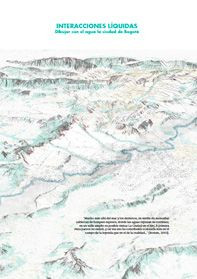
Interacciones líquidas. Dibujar con el agua de la Ciudad de Bogotà
|
|
|
Gloria Carolina Fiallo Cardona. Tesi doctoral, Universitat Politècnica de Catalunya, Departament d'Urbanisme, Territori i Paisatge, 2024.
The main objective of this thesis is to explain the interactions between water and the city of Bogotá to account for the role of water in the city, taking two epistemological approaches: water as a subject of law and as a networked agent. The study suggests a new way of appreciating the attributes of the territory, promoting reconciliation between water and the city and highlighting the constancy of change—the liquid condition.
|
|
|
|
|
|
|
|
|
Adiós a un río
|
|
|
John Graves. Madrid: Capitán Swing, 2025.
In the 1950s, a series of dams were proposed along the Brazos River in north-central Texas. John Graves realised that if the river’s system were changed, the beautiful and sometimes brutal surrounding landscape would change as well, along with the lives of the people. Therefore, he decided to visit that stretch of river, which he had known intimately when he was young. The book is the story of that farewell canoe trip.
|
|
|
|
|
|
|
|
Impacte del turisme sobre el paisatge i el patrimoni
|
|
|
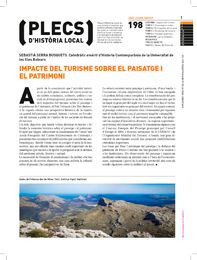
Plecs d’Història Local. Núm. 198 (2025).
This monograph of the magazine 'L'Avenç' starts from the observation that tourism is one of the main drivers of social change in today’s economic, cultural, political and social spheres. It presents three perspectives on the impacts of tourism on the landscape and heritage of Catalonia, the Valencian Community and the Balearic Islands. The director of the Landscape Observatory, Pere Sala i Martí, contributed to the monograph with the article ‘El paisatge al centre del model turístic’ (‘Landscape at the centre of the tourism model’).
|
|
|
|
|
|
|
|
|
Geografia literària. Andorra
|
|
|
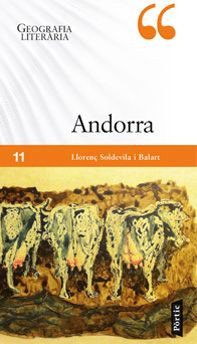
Llorenç Soldevila. Barcelona: Pòrtic Edicions, 2024.
This posthumous volume by the author makes a vast anthology of texts linked to the territory of the Principality of Andorra available to a wide audience. With abundant photographs, urban and mountainous spaces, buildings and monuments, supported by texts of writers who have described them, the book traces a new dimension of the landscape transfigured by literature.
|
|
|
|
|
|
|
|
Els paisatges trobats
|
|
|
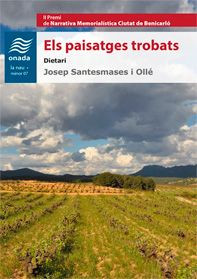
Josep Santesmases i Ollé. Benicarló: Onada edicions, 2017.
This is a diary starring the humanised landscape. Focusing on the most intimate surroundings of Vila-rodona and other places nearby, it offers a perspective on the evolution of crops, farming activity and the passing of the seasons. The book aims to weave itself into the everyday life of the landscapes that pass through everyone’s life and the need to contemplate them, feel them and experience them as a committed value.
|
|
|
|
|
|
|
|